

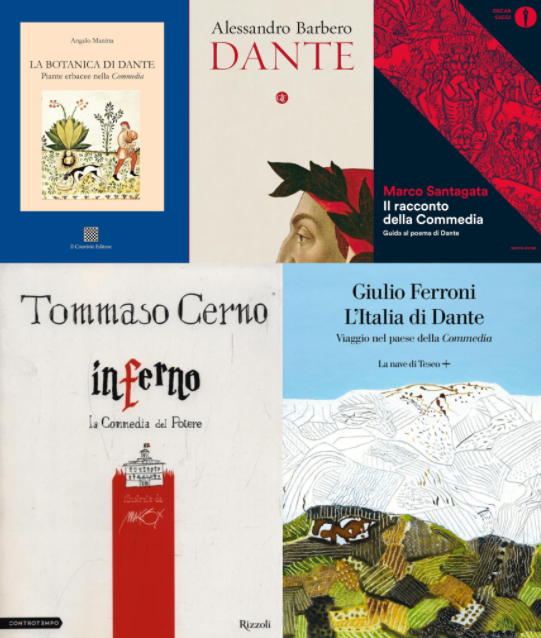
On the occasion of the celebrations for the 700th anniversary of Dante Alighieri‘s death, we would like to point out a number of recently published books – available among the new acquisitions of the “Carducci” library – to take various reading paths referring both to the poet’s major works and his influence on contemporary life and to the figure of the man Dante.
Two great scholars, Marco Santagata and Giulio Ferroni, deal with the Divine Comedy, the first proposing a sort of interpretative compass, a useful guide to orientate oneself in the vast universe of the allegorical poem, the second literally making a journey in stages along the peninsula, an itinerary to sound out the geography and the many places treated or cited in the work.
Dante’s encyclopaedic culture and attention to nature are revealed in a text by Angelo Manitta that deals with botany and plants in the Comedy.
One of the most appreciated historians of our time, Alessandro Barbero chisels a portrait of Dante focusing on his dimension as a man of the Middle Ages, inserted in the precise historical context that is the background to his complex personal story.
There is also an ironic reinterpretation of Dante’s Inferno by Tommaso Cerno, who uses the tercets and the contrapasso of Dante’s great model to recount the politics and power of Italy at the dawn of the Third Republic and the distortions, vices, sins and sinners of our country, with the help of Makkox‘s biting drawings.
The book sheets
Il racconto della Commedia. Guida al poema di Dante by Marco Santagata (Mondadori, 2017)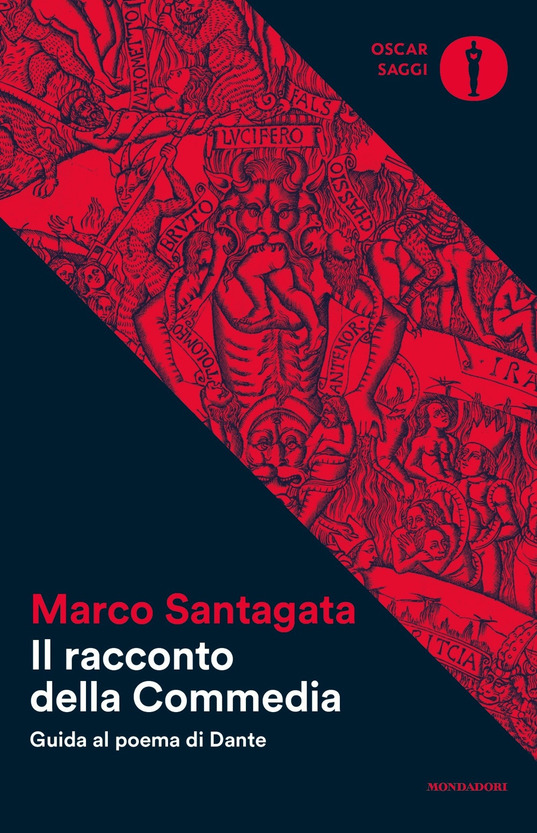
Dante’s Comedy is a marvellous, limitless and complex universe into which, today perhaps more than in the past, it is almost impossible to penetrate relying only on one’s own orientation ability. Without an adequate topographical map and an efficient compass, you soon risk to lose your way. But fortunately there is a Virgil who guides the reader from the “dark forest” of Hell to contemplate “the love that moves the sun and the other stars” in Paradise: Marco Santagata, with his fluent, engaging prose, devoid of technicalities, retraces Dante’s afterlife journey in these pages, revealing and making accessible the priceless treasure of emotions, feelings and thoughts hidden “under the veil of strange verses”.
L’ Italia di Dante. Viaggio nel Paese della «Commedia» by Giulio Ferroni (La Nave di Teseo, 2020)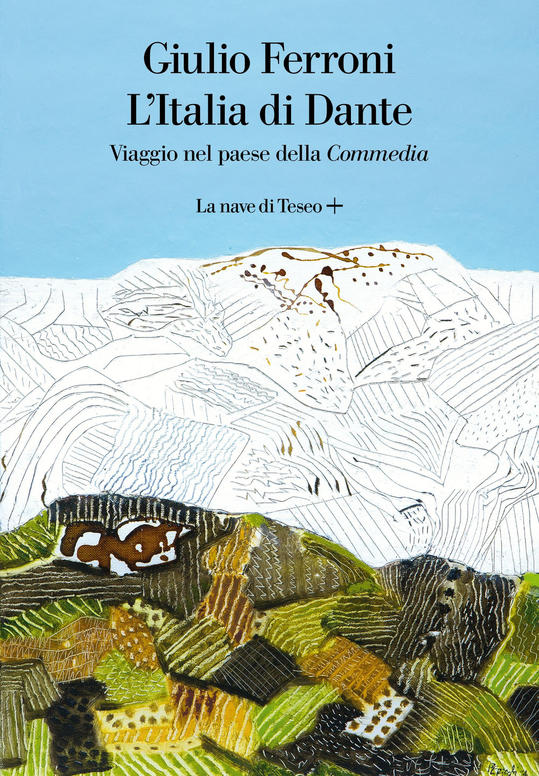
Following in the footsteps of the Divine Comedy, and almost repeating its path, Giulio Ferroni makes a veritable journey through Italian literature and history: a map of our country illuminated by the places Dante recounts in poetry. From north to south, from the Alps to the tip of Sicily, from Florence to Monferrato, from Montaperti to Verona, from Siena to Rome, Ravenna, Brindisi, we follow with Dante the different faces of this country “dove ‘l sì suona”, “serva Italia”, “bel paese”, “giardin dell’impero”: a journey through history, art, culture, with what luminously resists and with what consumes and undermines it; but also a journey that succeeds in restoring to us, even among the fleeting images of a lost present, the ever new depth of our memory.
Winner of the 46th edition of the Mondello International Literary Prize, Critical work section
Winner of the Viareggio-Rèpaci 2020 Award, Essay Section
La botanica di Dante. Piante erbacee nella «Commedia» by Angelo Manitta (Il Convivio, 2020)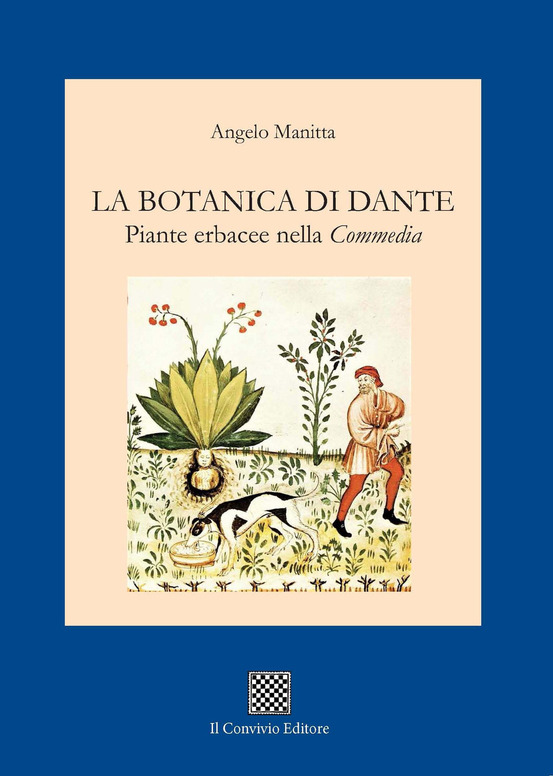
Dante’s environmental sensitivity and his deep respect for nature lead to a detailed analysis of some naturalistic similes and the presumable sources from which the poet drew. The essay, starting from the “selva oscura” (dark forest) and from the various species of trees that may constitute its structure, analyses the literary context of those herbaceous plants, commonly considered by man as infesting, in relation to Dante’s “ecological” idea, who also knows how to highlight certain positive aspects: ryegrass, couch grass, nettle, fescue, rush, clover, marsh straw and others.
Dante by Alessandro Barbero (Laterza, 2020)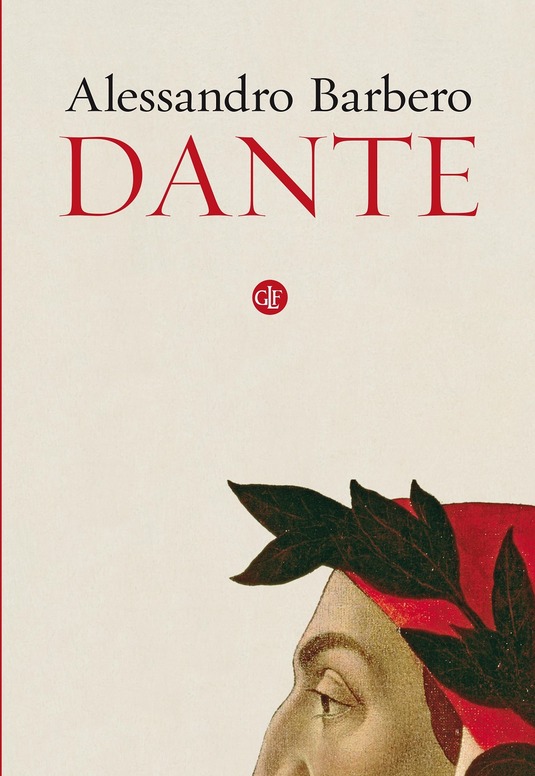
The genius who created the Divine Comedy is seen for the first time as a man of his time, whose values and mentality he shared. Alessandro Barbero draws a full-length portrait, bringing the reader closer to the customs, habits and politics of one of the most fascinating periods in history: the Middle Ages.
In this work, Alessandro Barbero reconstructs the life of Dante, the poet who created an immortal masterpiece, but also a man of his time, the Middle Ages, whose world and values these pages recount. A portrait written by a great historian, meticulous in his research and interpretation of sources, careful to give full justification to every statement and every hypothesis; but also a work of extraordinary stylistic richness, which reads like a novel.
Inferno. La Commedia del potere by Tommaso Cerno, Makkox (Rizzoli, 2013)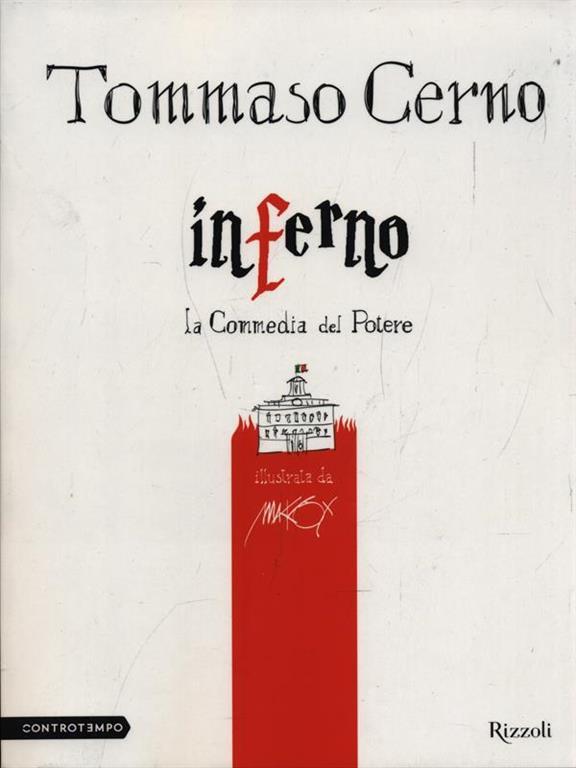
When Dante, about seven centuries ago, wrote “Ahi servva Italia, di dolore ostello, nave sanza nocchiere in gran tempesta, non donna di province, ma bordello!” (servant Italy, hostel of pain, ship without a helmsman in a great storm, not a woman of the provinces, but a brothel!), he certainly did not imagine that one day, when the deep, all-out corruption was unveiled in 1992, the same servant Italy would enter a much darker phase: the Second Republic. Seeing so many sinners coming from that new era, nefarious but above all inconsistent with the moral code that eternally regulates the Afterlife, Minos felt compelled to ask for help from “he who moves everything”, begging him to create an ad-hoc Hell. And so, right under Montecitorio (the seat of the Chamber of Deputies, N.d.T.), a nine-circle chasm opened up for the modern damned, each with his own counterpunch: from the enemy of the Fatherland Bossi, “doctor of secession, and not of laurel”, forced to ascend the afterlife Po, to Formigoni, unfaithful to his master (Don Giussani), relegated to a solitary tower “because I yielded to human desires, I who was brother of brothers”. And, together with them, almost all the powerful people of recent Italy, in bipartisan mode, from the natural opponent Vendola to Grillo, “no longer a cricket but a cock, with a high crest and chest always swollen to say that politicians do wrong”, from the great deluded Prodi to the great Caiman. In good company with damned “pop” people, emblems of their time, such as Maradona and Captain Schettino.