


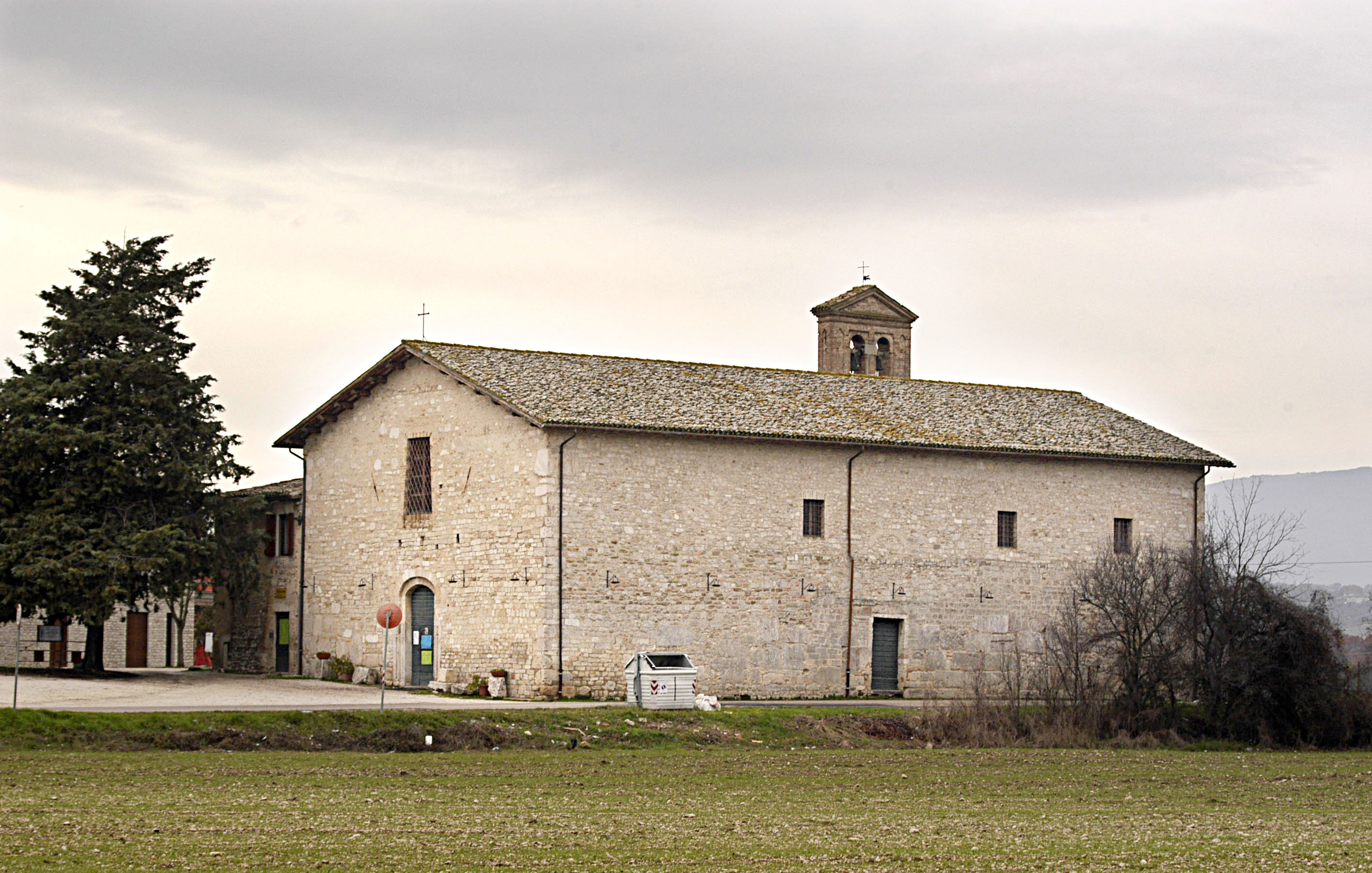
The church of San Sabino is dedicated to the Spoletan bishop Sabino, who faced martyrdom in 303 AD; the church dates to the XIIth century, yet it faced a number of transformations across the centuries, especially following the 1767 earthquake, which caused serious damages to its structure.
The present building features a façade whose upper half is the result of the end-of-XVIIIth-cen restoration; the apses, though showing the wounds of both time and man, are still in their original layout, and are remarkable for the use of re-used Roman blocks.
Inside, the nave and the aisles are separated by columns and pilasters, and an elevated presbytery hangs over the crypt with vaulted roof and Roman re-used columns, where the sarcophagus once holding the saint’s relics is kept. The saint’s deadly remains were carried to Ivrea in 954 AD by Corrado, Duke of Spoleto and son of Berengario d’Ivrea.
Bishop Sabino, persecuted because christianizer of Pagans, was arrested in Assisi and had his hands amputated: a woman named Serena healed him and the saint gratefully healed her niece, who was suffering from a serious eye-illness. When the saint was killed, Serena buried him where the basilica would then be built. Gregorius Magnus, Procopius from Cesarea and Paul the Deacon, they all speak of him and of the church; the latter talks of the contact between San Sabino and the Longobards, who also venerated him.
He was particularly dear to soldiers leaving for a campaign, who used to spend their last night in his church before leaving for their mission.
In this area, and very likely inside this very church, Saint Francis had the dream that would lead him to his conversion and to return to Assisi, leaving his participation to the Crusades behind.
Address: Località San Sabino