

A square exists in Spoleto, that during the centuries has been a pig market, a shelter for earthquake evacuees, an improvised playing field for the bull carousel. Yet this sloping, irregular widening, was in the antiquity a place of noble lineage, surrounded by noble buildings and elegantly paved.

In 1910 piazza Campello was provided with trees and a Monument to the Fallen was erected, but before that, the highest square in the city was nothing but an open, arid space towered over by the imposing mass of the Rocca.

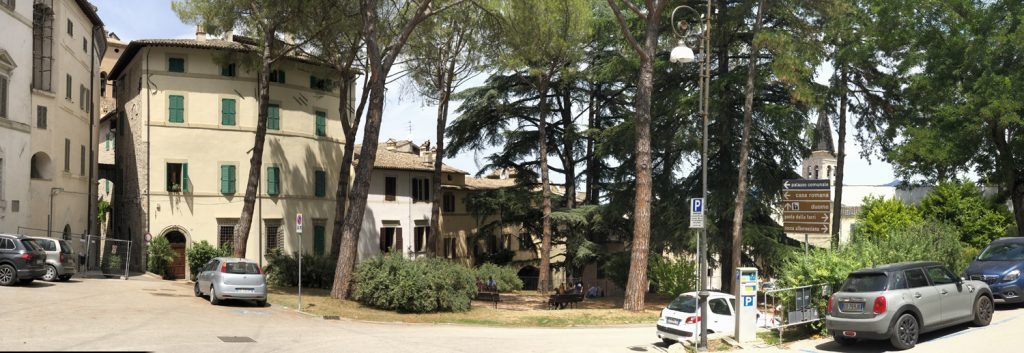
You can see it well from the prints and photos made at the turn of the 19th and 20th centuries, including one reproduced photographically and kept at the photo library in Palazzo Mauri; it offers a panoramic view of powerful suggestion with the square in the foreground and the tower of the Town Hall, the Cathedral and the mountains in the background.
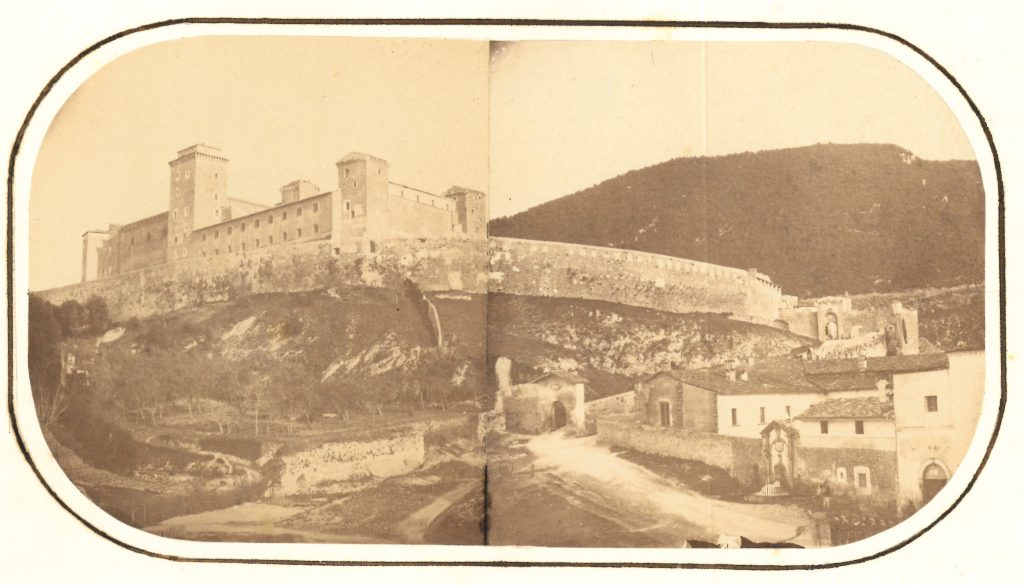
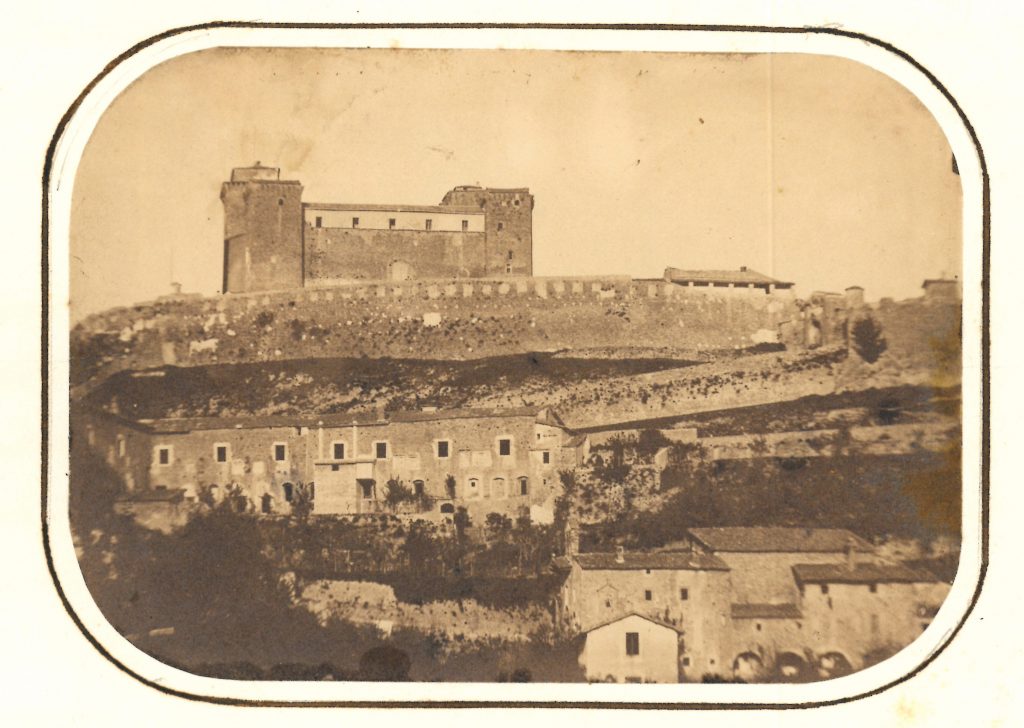
On September 17, 1860, the troops led by general Filippo Brignone entered Spoleto and took the city away from the Papal State The three photographic shots contained in a manuscript recounting the assault on the Rocca by the Piedmontese army refer to a slightly earlier period. The mentioned monument by Cesare Bazzani in piazza Campello commemorates the victims of the assault. The manuscript, thanks to a loan from the Carducci Library, was among the relics of the important congress/exhibition on the Risorgimento held in Milan in 1908.
From historical documents we know that until 1642 the square – dedicated to the diplomat, historian and man of letters Bernardino di Campello, who lived in the 17th century and was one of the most illustrious exponents of one of the oldest families in Spoleto – was used as a profitable pig market.
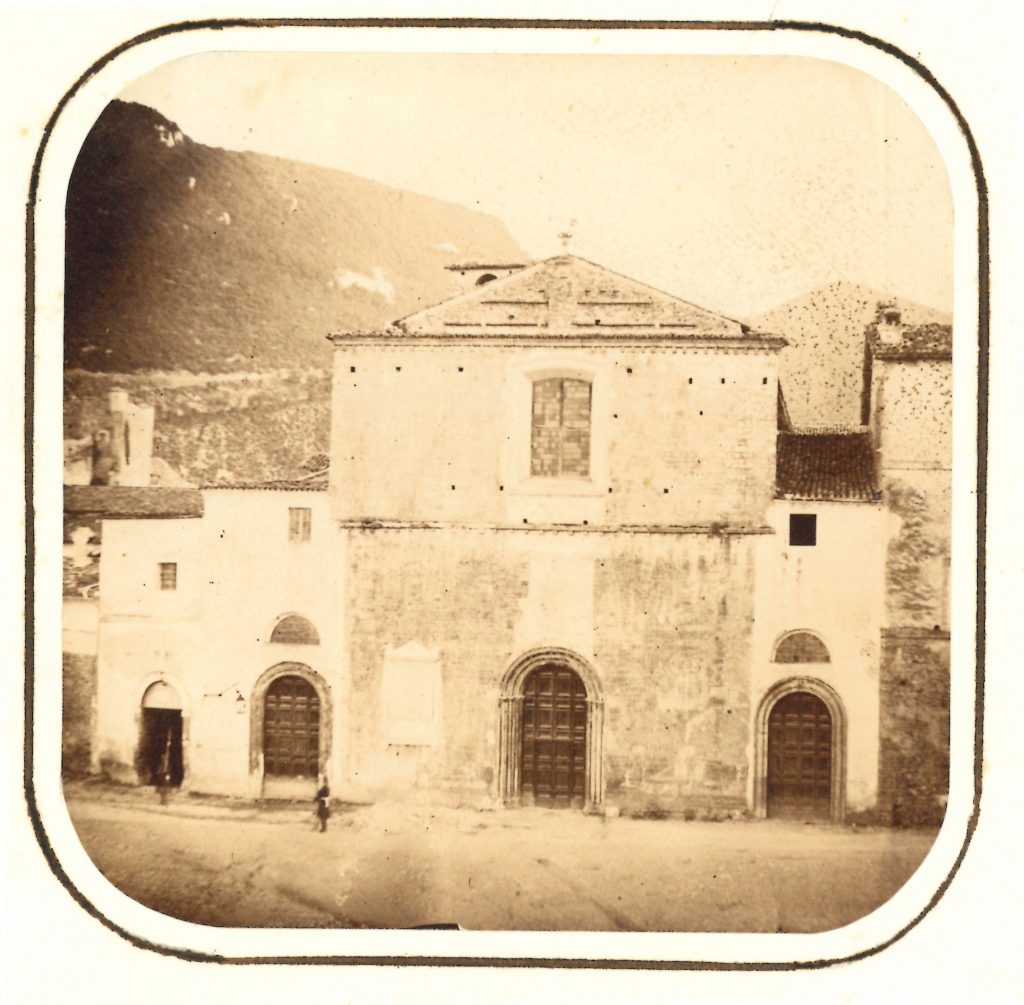
Another member of the family, Paolo Campello, in the multi-volume history dedicated to his family, tells of the use that was made of the square following a series of dramatic events, the first of which occurred on January 14, 1703: «It was raining cats and dogs when, at 1:45 at night, the noise and tremor of a «terrible earthquake was heard, which forced all people to go out of their houses and under the rain[…]. The shake went on almost all night long, and in the morning all houses and buildings were found more or less torn open and on the verge of slumping; and on the day of the sixteenth [January], another very big earthquake occurred which forced to abandon them, and to shelter in open places under huts, where it was necessary to stay over a year, because of the ongoing earthquakes, to have time to restore the houses. We [Campello] made the barracks in the square of San Simone, where sixty huts were made» including those for the bishop, the governor, the mayor. The square became a makeshift space in which to hold masses and open-air assemblies.
In the XIX century the square is adapted to more pleasant occurences: in his History of Spoleto, Achille Sansi tells us that in 1819 “having been celebrated this year the festivity of the Assumption with extraordinary solemnity, a company of citizens manufactured a wooden amphitheatre to their expenses for the joust of the bull and other shows… which building was preserved for some time.”


