

25 June 2011. Ten years of a historic date: When Spoleto entered the UNESCO World Heritage List
Exactly ten years have passed since, with a tweet shortly after ten o’clock in the evening on Saturday 25 June 2011, from its headquarters in Paris in Place de Fontenoy, UNESCO informed the world that the serial site “Longobards in Italy”, which includes the Basilica of San Salvatore in Spoleto and the Tempietto sul Clitunno, had been included in the World Heritage List, a list of the most important and significant material or natural assets of the countries of the world, a heritage of monuments, landscapes and artistic works considered fundamental for humanity.
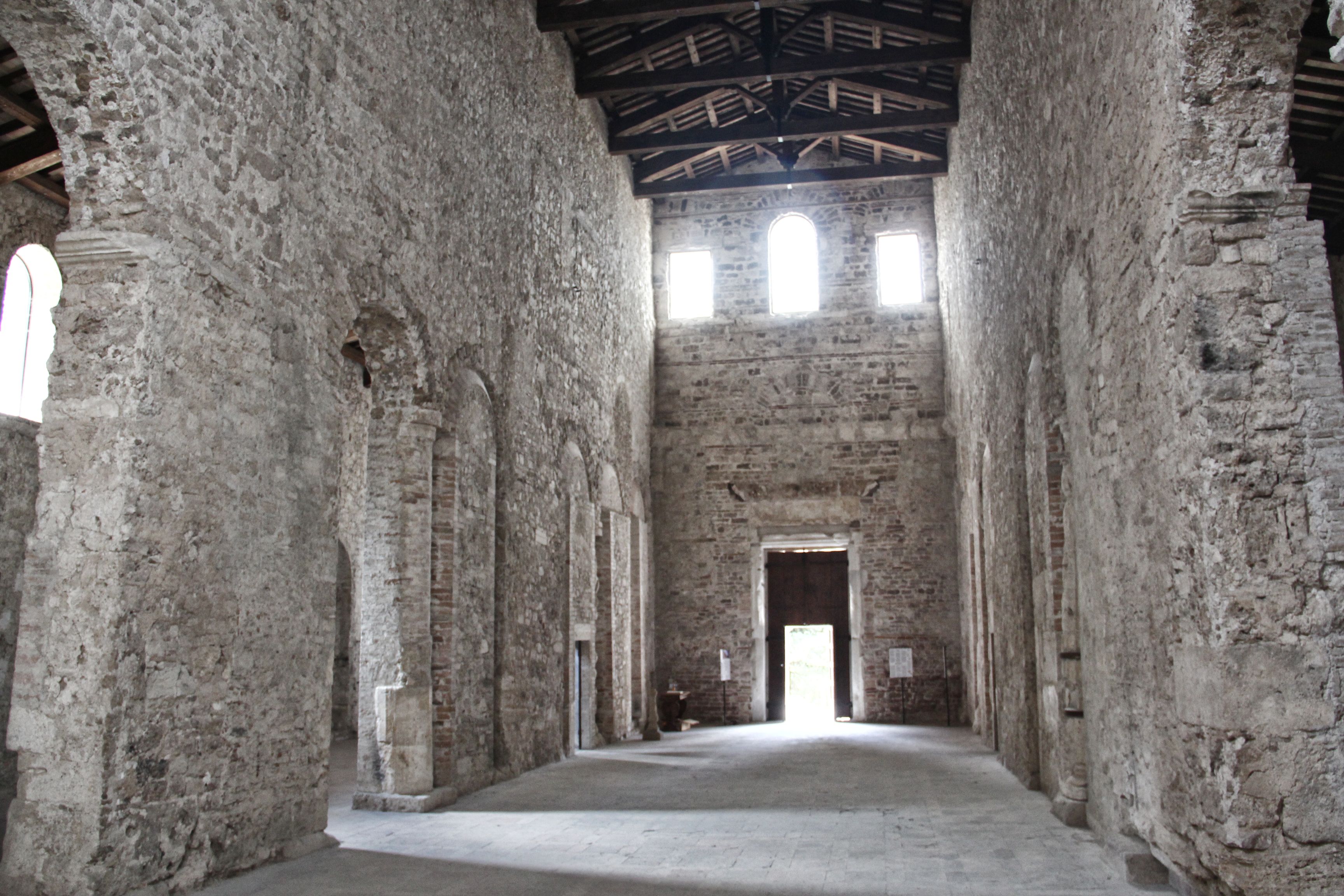
This is a prestigious recognition awarded by the United Nations Educational, Scientific and Cultural Organisation to sites of particular and exceptional importance. Being on the List means being recognised as having one of the most precious historical-artistic heritages in history, it means becoming part of a cultural circuit of absolute value that involves exposure and visibility on a planetary level, and it also means being able to count on actions and projects of protection, enhancement and cultural and educational promotion of the highest order.
On the occasion of the tenth anniversary of that date we propose a special episode of the columns “Long Ago in Spoleto” and “At Home with the Longobards”, to celebrate that exciting moment.
Everything began at the end of 2007 for Spoleto, when, prompted by MIBACT, an initial candidacy by the “Longobard” cities of Cividale del Friuli and Brescia was extended to include other testimonies of Longobard civilisation in Italy, including Spoleto, capital of one of the most important Longobard duchies in the peninsula. Intensive planning and writing work led to the preparation of one of the most complex and innovative dossiers ever submitted to UNESCO, a serial site whose official candidature was presented in January 2008.
In 2009, the candidacy was examined by an inspection body appointed by UNESCO, ICOMOS, which suggested some improvements. In the case of Spoleto, for example, the idea is to extend the buffer zone – which is supposed to “guarantee an additional level of protection for World Heritage Sites” – to the entire historic centre of the city.
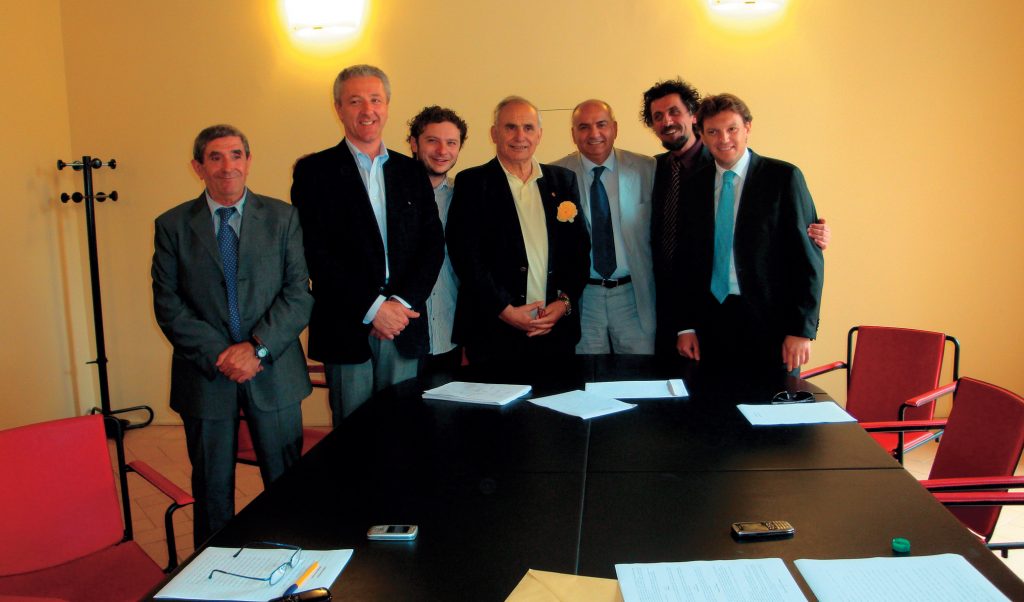
In June 2009 the “Italia Langobardorum” Association was established in Spoleto, a structure with the task of managing the serial site and implementing the objectives and actions set out in the UNESCO Candidacy Management Plan and its subsequent implementations. Spoleto became a centre for the coordination, assembly and drafting of texts useful for the re-submission of the candidacy at the beginning of 2011.
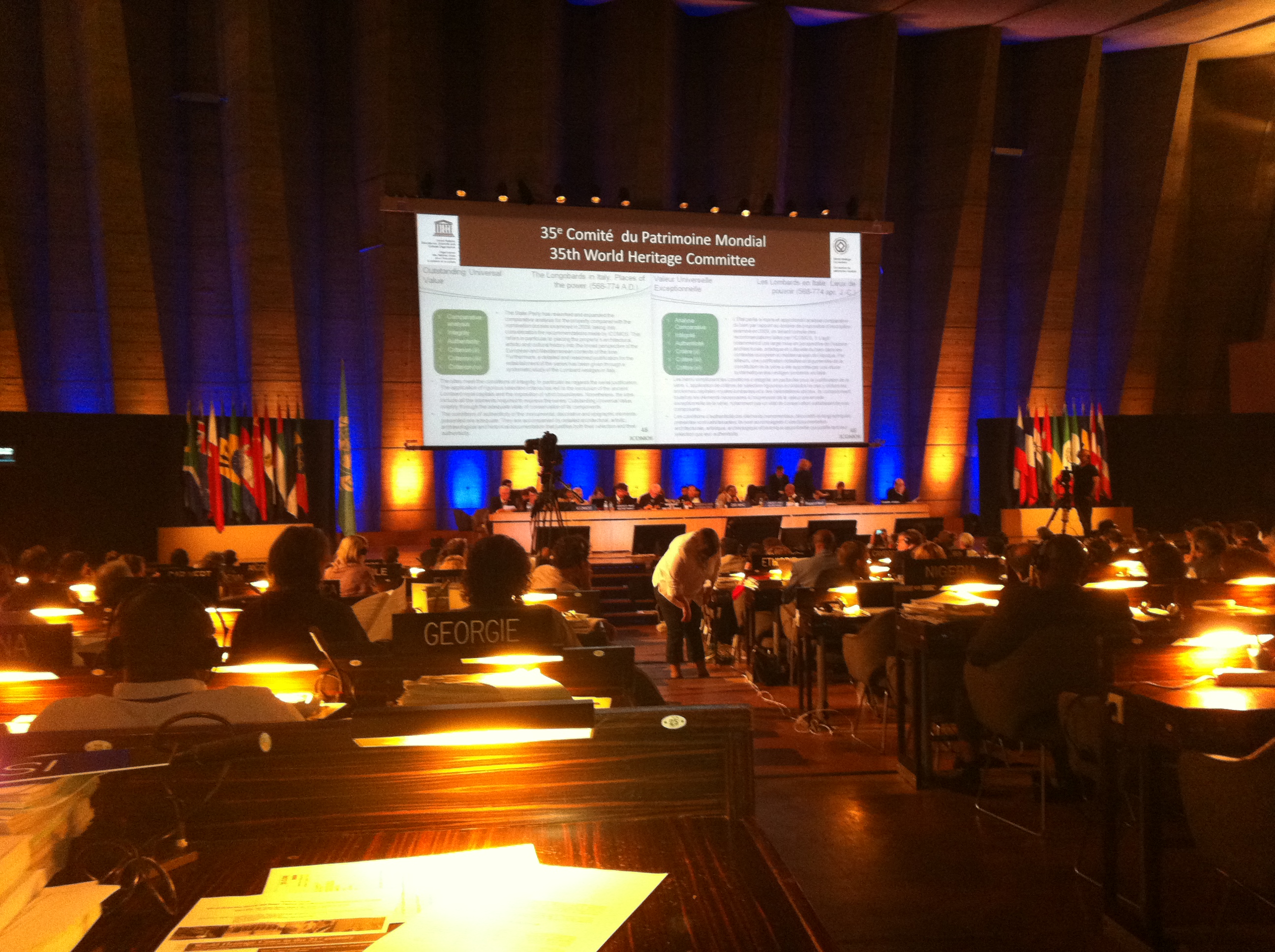
During the 5th session of the UNESCO World Heritage Committee, on 25 June 2011, Spoleto, together with Benevento, Brescia, Campello sul Clitunno, Castelseprio, Cividale del Friuli and Monte Sant’Angelo, joined the list of sites declared to be of outstanding universal value, with the satisfaction, pride and responsibility of seeing its history, heritage and identity being appreciated by the international community and once again being admired by the eyes of the world.
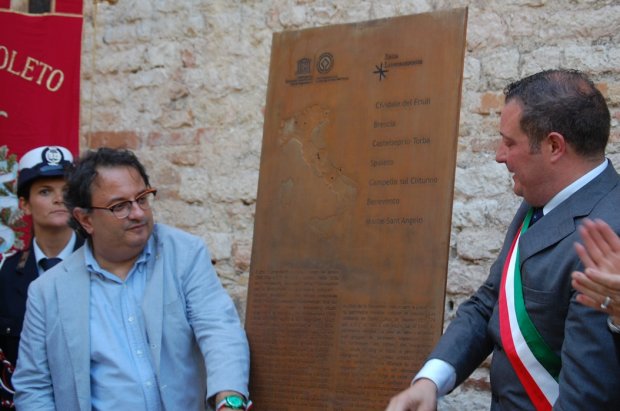
On Friday 6 July 2012, in the square next to the basilica, a plaque was unveiled in the public ceremony of inscription of San Salvatore into the UNESCO serial site.
An exceptional prelude to the fertile link between Spoleto and the knowledge of Longobard culture occurred in 1951 when, in September, the Accademia Spoletina organised the First International Congress of Longobard Studies in Palazzo Mauri. This extraordinary initiative gave rise to CISAM, the Italian Centre for Early Medieval Studies, a cultural institution in Spoleto that is still an essential point of reference for medieval research worldwide and that we will discuss in another episode of Long Ago in Spoleto.
NEWS ARCHIVES
- 18 May 1979, the city tributes Thomas Schippers | 18 June 2021
- The Road to Monteluco | 11 June 2021
- Carla Fracci, Grand Dame of Italian Ballet | 4 June 2021
- The city’s electrical system comes into operation | 28 May 2021
- The Spoleto-Forca di Cerro 1926 Car Race | 21 May 2021
- Great Craftsmen from Spoleto | 14 May 2021
- King Umberto I comes to town | 7 May 2021
- Achille Sansi, historian | 30 April 2021
- The Italian Resistance Movement | 23 April 2021
- Alessandro Onofri’s “Biancofiore” premiered | 16 April 2021
- The library at Palazzo Mauri | 9 April 2021
- The history of Ponte Garibaldi | 2 April 2021
- Dante in the Lands of the Duchy | 26 March 2021
- The City’s Remembrance Day | 19 March 2021
- The inauguration of the Vallocchia Urban Aqueduct | 12 March 2021
- Annibale della Genga and Porta San Gregorio | 5 March 2021
- Lawrence Ferlinghetti at the Festival Of Two Worlds | 26 February 2021
- August 1904. From a congress in Spoleto, the Federazione Nazionale delle Pubbliche Assistenze is born | 19 February 2021
- The Spoleto Carnival in posters from the 19th and 20th centuries, and in photos from the 1930s | 12 February 2021
- The Vocational School of Arts and Crafts | 8 February 2021
- December 1897: the Teatro Caio Melisso hosts the “Cinematograph” | 29 January 2021
- July 1904: first public phone booth in Spoleto | 15 January 2021
- Roman relics in the gardens of Spoleto | 8 January 2021
- Olive oil exhibition in 1930 | 18 December 2020
- The Town Hall in 1913 | 4 December 2020
- 1865: The third leg of the works on the Traversa Interna begins | 27 November 2020
- The birth of the Cotton Mill | 20 November 2020
- Racewalkers at the Giro della Rocca prepare themselves for the London Olympic Games: June, 1948 | 13 November 2020
- Teatro Nuovo: 10-11 September 1864 | 6 November 2020
- Images, August 1948. Teatro Nuovo, Spoleto, second edition of the competition for young opera singers | 30 October 2020
- The 1948 Mille Miglia in Spoleto. That time when Tazio Nuvolari… | 16 October 2020
- Beniamino Gigli in Spoleto in September, 1932 and August,1939 | 9 October 2020
- The Casina dell’Ippocastano | 2 October 2020
- Catalogue of public posters as documents of city chronicles | 25 September 2020
- 27 May 1948. When Gino Bartali crossed the finish line in Spoleto | 18 September 2020
- The Festival Of Two Worlds’ Yearbooks from 1975 to 1979 | 11 September 2020
- The 1967 Festival Of Two Worlds’ Yearbook | 26 August 2020
- The Festival Of Two Worlds’ Yearbooks #2 | 21 August 2020
- The Festival Of Two Worlds’ Yearbooks | 19 August 2020
- 1947-48: Motorcycling in Spoleto | 14 August 2020
- When the Spoleto soccer team’s name was Virtus | 7 August 2020
- Ads and commercials in 1910 Spoleto | 24 July 2020
- The Spoleto City Museum | 17 July 2020
- Restoration works at the Teatro Caio Melisso | 10 July 2020
- Folk feasts’ posters in early XXth-century Spoleto | 3 July 2020
- “Urban VIII on his way to Rome”: or the odd story of the Spoletan Bernini | 26 June 2020
- The ex Spoleto-Norcia Railway: from the first project to its opening | 19 June 2020
- Spoleto Tourist Guidebooks #3 | 12 June 2020
- Christo’s Art at the Festival of Two Worlds | 5 June 2020
- Raffaele Canè – Pictures | 29 May 2020
- Spoleto Tourist Guidebooks #2 | 22 May 2020
- Spoleto Tourist Guidebooks | 15 May 2020
- Pietro Mascagni: the concert at the Teatro Nuovo | 8 May 2020
- The cable car Spoleto-Monteluco | 1 May 2020
- Two days of aviation in Spoleto | 24 April 2020


