
It’s Christmas time, but there is no Christmas without the attorta at home
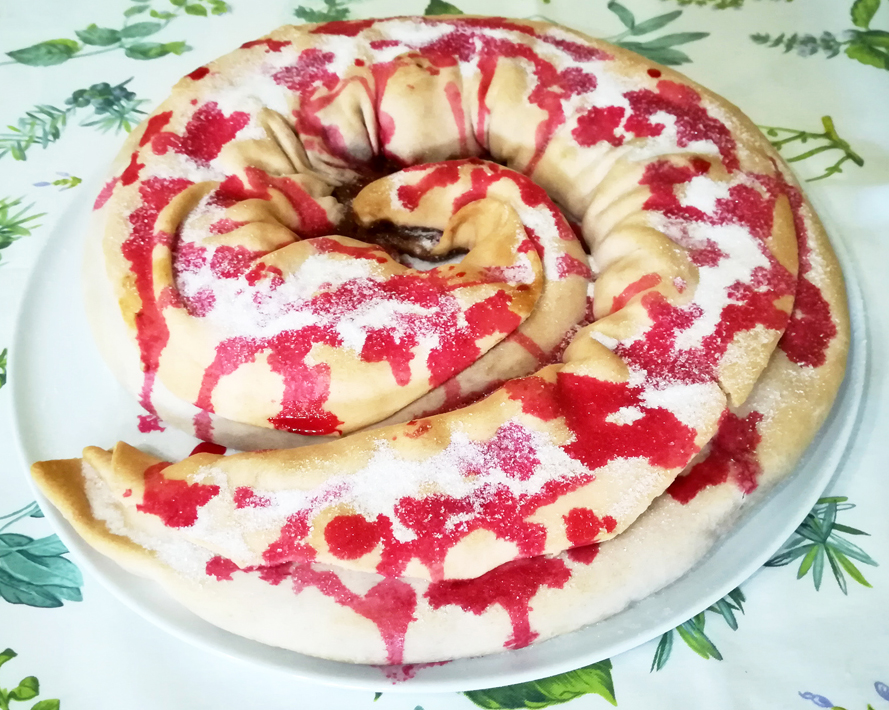
The typical cake by the characteristic rolled shape (hence the name attorta), made with apples and dried fruit, whose origin is traced back to the Lombards, the people who made Spoleto the capital of the duchy by the same name. After coming into contact with the population of the Italian peninsula and the territories of the Byzantine empire, the Lombards inherited from the Latins a simplified form of the secunda mensa, a sweet dish that ended the most important meal of the day.
They mainly used fresh fruit picked from the trees, apples, quinces, pears, cherries, peaches, figs, sorbs, medlars, fresh or cooked and seasoned with honey. Dried fruit such as walnuts, hazelnuts, almonds and chestnuts were also a regular feature of the table, as they provided important nutrition even for the poorest diets of the lower classes.
The attorta shares its basic ingredients with the gubana, another cake typical of Cividale del Friuli, the city that was the capital of the first Lombard duchy in Italy. Various legends trace the gubana (from “guba”, which in the Slavic language means “fold” due to its folded shape) back to the Goths.
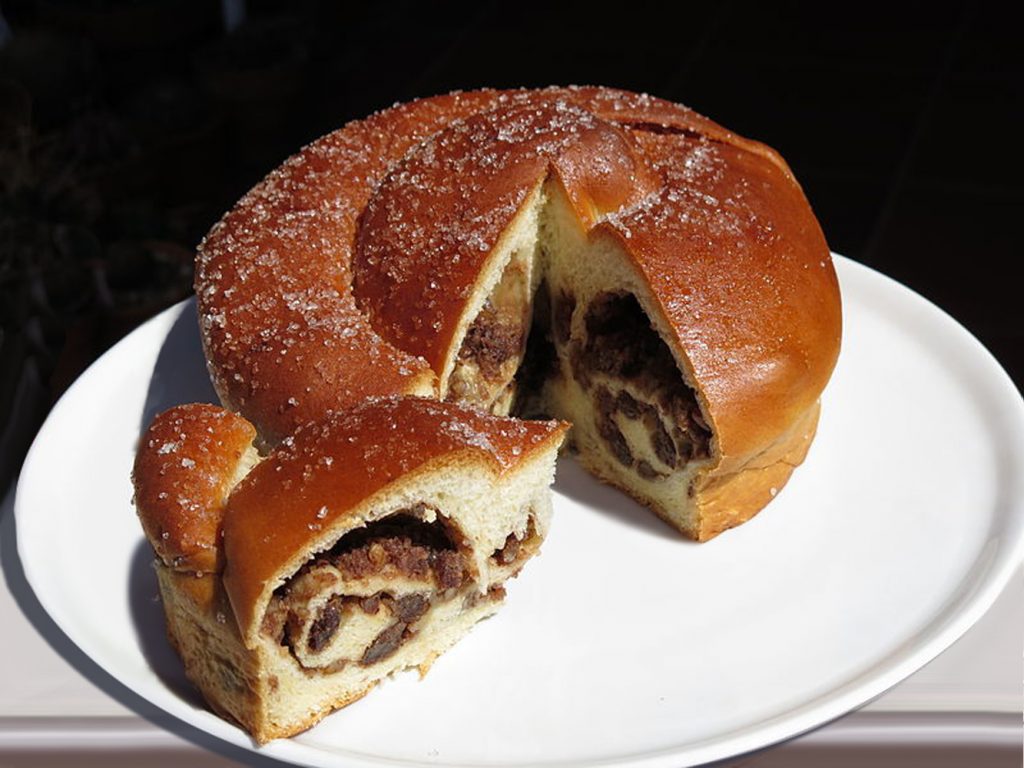
The preparation of both cakes starts with the ingredients placed on a base of dough (thin in the attorta, 2-3 cm high and well risen in the gubana). The base is then rolled up and, in the attorta, twisted into the shape of a spiral, while in the gubana, it is folded so that it also develops in height.
Won’t you try? Here are two recipes from the didactic food book published by the Associazione Italia Langobardorum: “Alla tavola di Re Rotari. Tradizioni alimentari e culinarie nell’Italia dei Longobardi”, Spoleto 2018.
Happy Monday with the Longobards and Merry Christmas.
NEWS ARCHIVES
- Hackathon. Langobard digital marathon 1-4 December 2020 | 30 November 2020
- Games with the Langobards | 16 November 2020
- At home with the Langobards – Duke Lupus | 2 November 2020
- Thrasimund II | 19 October 2020
- Abbey of San Pietro in Valle | 5 October 2020
- Faroald II, duke of Spoleto (681-728) | 28 September 2020
- Edictum Rotharis |21 September 2020
- I speak Langobardic | 14 September 2020
- Thrasimund I | 7 September 2020
- The Langobards first-hand | 31 August 2020
- Atto: IV duke of Spoleto | 24 August 2020
- Theodelapius: duke of Spoleto | 10 August 2020
- The duchies of Spoleto and Benevento | 3 August 2020
- Ariulf, Spoleto’s 2nd duke | 27 July 2020
- The United Nations Educational, Scientific and Cultural Organization (UNESCO) | 20 July 2020
- The Langobards’ corner at Palazzo Mauri | 13 July 2020
- The Mosaic at Palazzo Pianciani | 6 July 2020
- The Duchy of Spoleto: Palazzo Mauri | 29 June 2020
- Nine years past the inclusion into the World Heritage List (WHL) | 22 June 2020
- The two bishops | 15 June 2020
- The duchy of Spoleto and its first duke, Faroald I | 8 June 2020
- Totem animals in the Langobards’ Imagination | 1 June 2020
- A thrust or a cut? | 25 May 2020
- The Warrior | 18 May 2020
- What a beard did these Langobards have! | 11 May 2020
- Intelligence in their hands | 4 May 2020
- The aurifex and the techniques used in Goldsmithing at the times of the Langobards | 27 April 2020
- The aurifex and the importance of Goldsmithing in the Duchy of Spoleto | 20 April 2020


